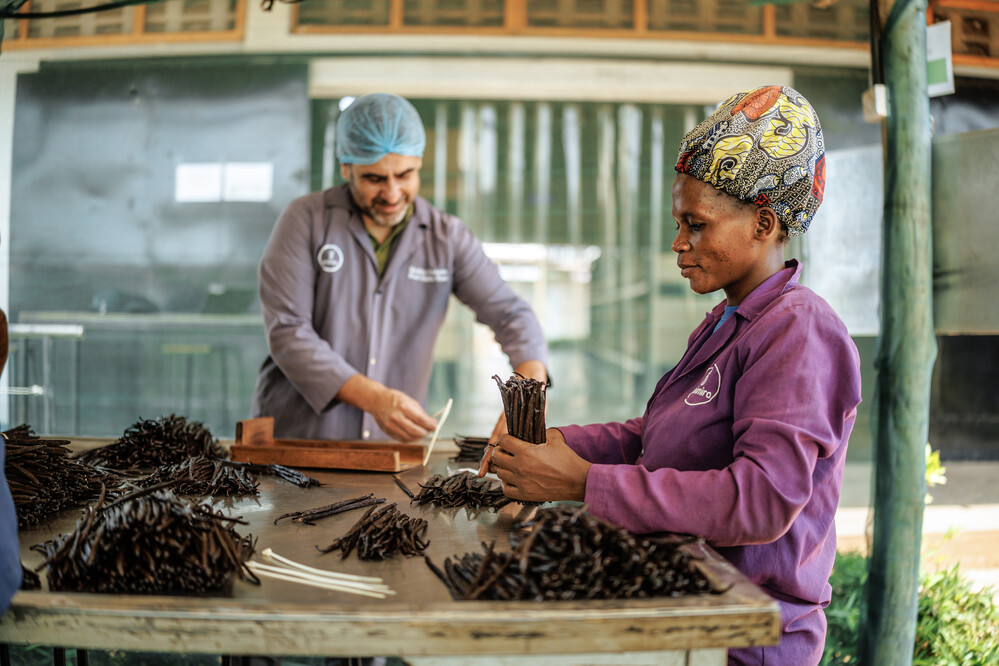
Through the money they send home, migrants support livelihoods, strengthen economies and contribute directly to the Sustainable Development Goals (SDGs).
Over the past decade, migrants have sent US$5 trillion in remittances to low- and middle-income countries (LMICs), exceeding official development assistance and equalling foreign direct investment. More than one-third of these funds have reached rural areas, where they count the most. By 2030, an estimated US$4.4 trillion in additional remittances will flow to low- and middle-income countries (LMICs).
As part of its decade-long campaign highlighting the role of remittances in achieving the SDGs, the IDFR 2025 campaign will focus on showcasing how remittances contribute to financing development. It will also identify key priorities to maximize their impact on households’ economic and climate resilience, as well as on sustainable local development.
Financing gaps for sustainable development are large and growing – with estimates of US$4 trillion additional investment needed annually for developing countries[1].
Remittances are already playing a crucial role in reducing this financing gap as a reliable and direct source of funding at the household level. While they primarily cover immediate needs, it is estimated that up to a quarter of funds are directed towards income-generating activities and long-term goals, including housing, savings, investments, education and healthcare.
Expanding access to remittances and linked financial services among receivers is key to optimizing the impact of these flows. By providing recipients with adapted financial services, as well as non-financial support, remittances can have a greater transformative impact on development.
Additionally, migrants and diaspora contribute through direct investments, skills transfer, and knowledge networks, further enhancing economic and social development in their countries of origin. Providing appropriate investment instruments and vehicles is crucial to facilitate the diaspora’s appetite and ability to invest, particularly in countries and regions facing challenges to mobilize capital.
In 2025, the Fourth International Conference on Financing for Development (FfD4) provides a unique opportunity to reform financing at all levels, and to unlock the full potential of remittances and diaspora investment for sustainable development. This year, the IDFR campaign calls for a renewed and expanded commitment to fully maximize the impact of remittances in achieving the SDGs in LMICs.
[1] UNCTAD. 2023. World Investment Report (United Nations publication. Sales No. E.23.II.D.24. New York and Geneva). https://unctad.org/system/files/official-document/wir2023_en.pdf
To fully harness the development potential of remittances in LMICs, action is needed across six key areas:
Strengthen digital and financial inclusion among migrant households in receiving-countries. Ensure migrant families, particularly women and those in rural communities, have access to remittance-linked financial services, and are equipped with the skills and tools to manage their finances effectively. Promote policies that support and incentivize savings and investments among remittance recipients and diaspora.
Improve digital financial infrastructure and engage the private sector to innovate and support remittance access. Strengthen payment systems and leverage emerging digital technologies. Promote public-private partnership approaches that stimulate client adoption of new technology-driven systems.
Enhance efforts to reduce remittance costs to less than 3 per cent of amounts transferred by 2030. Promote digital technologies, competition among money transfer operators, transparency requirements for fees and commissions charged, and by working with regulators to ensure a proportionate application on family remittance flows.
Promote policy coherence among government institutions to create synergies across national priorities that integrate migrant workers and their contributions into national development plans.
Facilitate secure diaspora investment and related innovative instruments. Develop programmes and instruments to promote investments from the diaspora in local development and entrepreneurship in countries of origin.
Support remittances and diaspora investments as catalysts for resilience in climate-vulnerable communities. Promote adaptation strategies, tailored financial services and investment mechanisms. Ensure remittance beneficiaries, diaspora investors and rural entrepreneurs have access to adequate climate finance education to enhance sustainable and climate-resilient development.
Remittances are more than just financial transactions—they are a lifeline for millions of families, a catalyst for economic empowerment, and a key driver of sustainable development.
As the world seeks innovative ways to bridge the development financing gap, the IDFR 2025 campaign calls for greater recognition of the part remittances are playing in reducing the gap, as well as stronger policies and financial inclusivity to maximize the impact of remittances towards families’ economic resilience and sustainable development.
FfD4 Seville sets a new benchmark: The adoption of the Compromiso de Sevilla established a renewed global framework for financing development with remittances and diaspora investment formally recognized as key levers, especially in rural areas.
Remittances prioritized: The outcome includes the strongest global commitments to date on reducing transfer costs, scaling digital access and expanding financial inclusion for migrants and their families in countries of origin.
Broad country leadership: This outcome reflects the culmination of a sustained and collaborative process, supported by the leadership of countries including Guatemala, Mexico, and the Philippines, and with strong technical engagement from IFAD and its partners.
Momentum for new partnerships: FfD4 catalyzed new global cooperation on remittances, diaspora investment climate resilience and local development finance.